Cities rarely get a second chance at writing their identity. Old Cairo is one of them. For centuries the city grew in layers, each one adding a different mood, rhythm and cultural depth. But like many major capitals, parts of its historic core began to fall out of alignment with the pace of modern life. The buildings were old, the roads were narrow, the infrastructure aged faster than it was replaced. What once made Cairo charming also made it slow, crowded and difficult to maintain.
Today, that narrative is changing. A wide national movement is reshaping Old Cairo into a more accessible, more iconic and more economically active capital. This transformation is not about beautification alone. It reflects a strategic understanding that the Cairo of the future cannot be built without restoring the Cairo that already exists.
The renewal of Downtown, the redevelopment of Attaba, the Fustat parks project and the revival of multiple heritage districts all point to one idea. Egypt is not only expanding its new cities. It is rewriting the relationship between heritage, infrastructure and national identity.
A City Remembering Its Value
Old Cairo has always been more than its buildings. It is an emotional archive, a place layered with stories, neighborhoods, architecture and social patterns that shaped Egyptian identity. Downtown was once the cultural center of the region. Attaba was the commercial pulse that supplied millions. Fustat was the birthplace of Islamic Cairo. But as the modern city grew, these districts struggled to keep pace with infrastructure demands and shifting economic habits.
The current wave of renewal suggests a different approach. Instead of treating Old Cairo as a static heritage zone, the strategy is to re-activate it as a living, economically productive environment. Downtown’s restoration is a clear example. The cleaning of facades and the reorganization of public spaces is not meant to turn it into an outdoor museum. It is designed to make the district functional again, to allow residents, businesses and cultural institutions to return gradually. The goal is to let the historic texture breathe while giving it the systems it needs to support contemporary life.
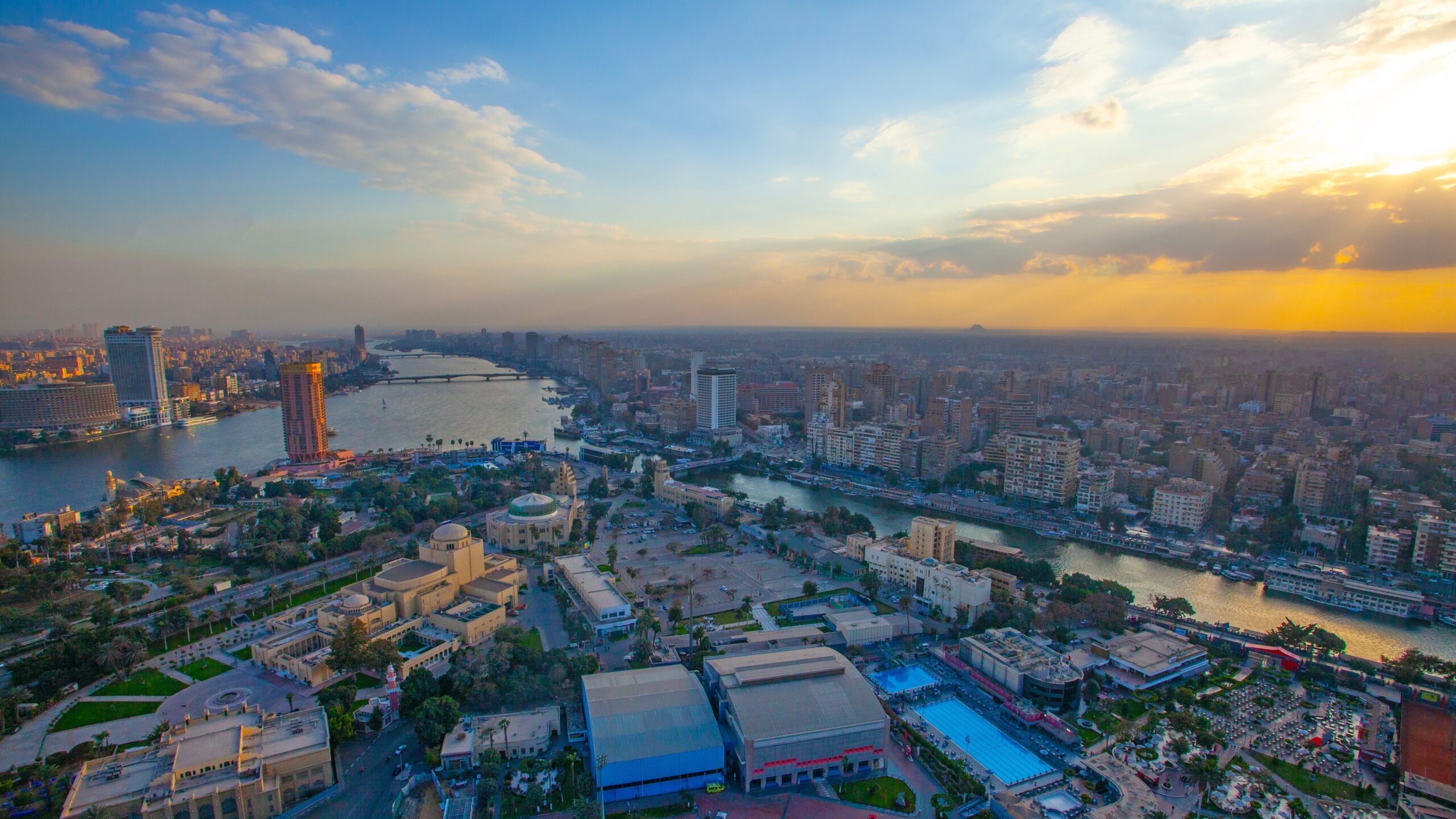
Fustat offers a different but equally important layer to the story. Its redevelopment introduces one of the largest connected green spaces in the region, tying together archaeological sites, cultural landmarks and residential districts. Fustat Park is not simply a recreational project. It is a movement toward reclaiming outdoor life in the city, at a scale Cairo has long needed but never fully realized. Cities that invest in parks of this magnitude see long-term gains in tourism, well-being, real estate value and ecosystem preservation. Cairo is positioning itself within that global trend.
Attaba follows yet another path. It is not a district of facades and boulevards. It is a district of movement, trade, noise, improvisation and daily survival. Its renewal focuses on structure rather than transformation. The intention is to protect the district’s commercial identity while giving it the infrastructure required for safety, accessibility and economic continuity. When cities renew markets without erasing them, they secure cultural authenticity while unlocking economic efficiency.
Across these three areas, a coherent vision emerges. Cairo is not being polished. Cairo is being recalibrated.
Why Now
Urban renewal rarely happens simply because it is needed. It happens when a city reaches a moment where the cost of not renewing becomes greater than the effort required to do so. Cairo has reached that moment.
The expansion of Greater Cairo over the past decade created a new urban balance. New Cairo, the New Capital, Mostakbal City and massive infrastructure upgrades have pulled distribution of population outward. This outward movement gave the government an opportunity: the ability to renew Cairo’s center without disrupting the entire city’s daily flow. Ten years ago such renewal would have caused severe congestion. Today the system can withstand it.
There is also economic logic. Tourism is evolving toward experience-based travel. Global visitors increasingly prefer cities that offer walkable historic districts, curated cultural journeys and restored architecture. Cairo has the content. It lacked the structure. Renewing the historic center allows Egypt to reposition itself not as a country of individual monuments, but as a country of complete urban narratives.
Another factor is cultural continuity. Egypt is investing in museums, archaeological development, heritage trails and cultural programming at a scale not seen in decades. These investments need a coherent urban environment. Reviving Old Cairo ensures that cultural spending has a long-term urban foundation.
There is also a practical reason. Infrastructure today can do what infrastructure of the past could not. Modern transportation planning, tunnels, bridges, mobility systems and digital mapping give Cairo new tools for reorganizing dense districts that once felt impossible to fix.
The timing is not accidental. It reflects a moment where vision, infrastructure and necessity align.
How Renewal Shapes Egypt’s Economic Future
Urban development is often discussed through the lens of design and aesthetics. But in Cairo’s case, the economic implications are just as significant.
A revived historic center generates economic energy in multiple directions. Tourism expands beyond traditional sites toward multi-day cultural routes that include Downtown, Islamic Cairo, Fustat and heritage commercial districts. Hotels benefit from higher occupancy. Restaurants and small businesses see new footfalls. Crafts and cultural enterprises regain relevance.
Property value in organized historic districts rises not because of speculation but because renewed infrastructure attracts long-term users. Investors see stability. Residents see quality. Businesses see opportunity.
Job creation becomes widespread. Heritage restoration requires specialized labor. Infrastructure upgrades require engineers and contractors. Public space management requires service teams. Cultural programming requires professionals in art, tourism and event management.
A renewed center also reduces the long-term operational cost of the city. When roads, drainage, lighting and public mobility are rebuilt, maintenance becomes predictable rather than reactive. Cities save money when they prevent deterioration instead of responding to it.
There is also a symbolic economic value. Countries signal confidence when they invest in their historic cores. It tells the world that the city is not expanding because it is failing, but because it is growing in multiple directions at once.
A Vision Larger Than the Districts Themselves
What is left unsaid in most announcements is perhaps the most important idea. Cairo’s renewal is not a beautification program and not a heritage campaign. It is a new definition of what an Egyptian city should be.
A place where history and modernity exist side by side without contradiction.
A place where daily life is not disconnected from culture.
A place where old districts offer new opportunities, and new districts do not overshadow the identity of the capital.
The Cairo being shaped today is not trying to imitate another city. It is trying to reclaim its own logic. A logic defined by depth, multiplicity, walkability, public life and cultural presence.
This is why the renewal is happening district by district, each with a different strategy. Downtown focuses on architecture and urban rhythm. Fustat focuses on landscape and heritage. Attaba focuses on economic organization. Together, they create a model for how a mega-city preserves its soul while preparing for the future.
The Road Ahead
Cairo’s renewal will not be fast. True urban transformation never is. Historic buildings require time to restore. Markets require social understanding. Parks require years of cultivation. Districts require patience. But the direction is unmistakeable. Cairo is stepping into a new era where the center is not overshadowed by the edges but elevated alongside them.
A global city cannot rely only on its new neighborhoods. It needs a strong historic core, a strong cultural identity and a strong economic foundation. Old Cairo is on its way to becoming all three.
The renewal taking place today is shaping the Cairo that future generations will inherit. A Cairo that is iconic not only because of its past but because of how confidently it builds its future.