In early November 2025, Egypt announced one of the largest development agreements in its modern history: a landmark partnership between NUCA and Qatari Diar, the real estate investment arm of Qatar’s sovereign wealth fund, to create a full-scale coastal city in the Alam Al-Roum region of Matrouh. The announcement sent waves across regional property markets. Not only because of the extraordinary investment numbers attached to the project, but also because of what this deal represents for Egypt’s urban future, its North Coast strategy, and the deepening economic ties between Cairo and Doha.
For months, rumours circulated that Qatar was preparing a major entrance into Egypt’s Mediterranean coast. But few expected the scale to reach nearly $30 billion in committed investment, supported by an upfront land payment of $3.5 billion to be delivered by the end of December. Even by regional standards, where Gulf real estate projects often cross the multibillion-dollar line, Alam Al-Roum stands out for its size, timing, and long-term economic weight. Prime Minister Mostafa Madbouly described it as “one of the biggest development schemes in the Arab world,” signalling how central the project is to Egypt’s wider development strategy.
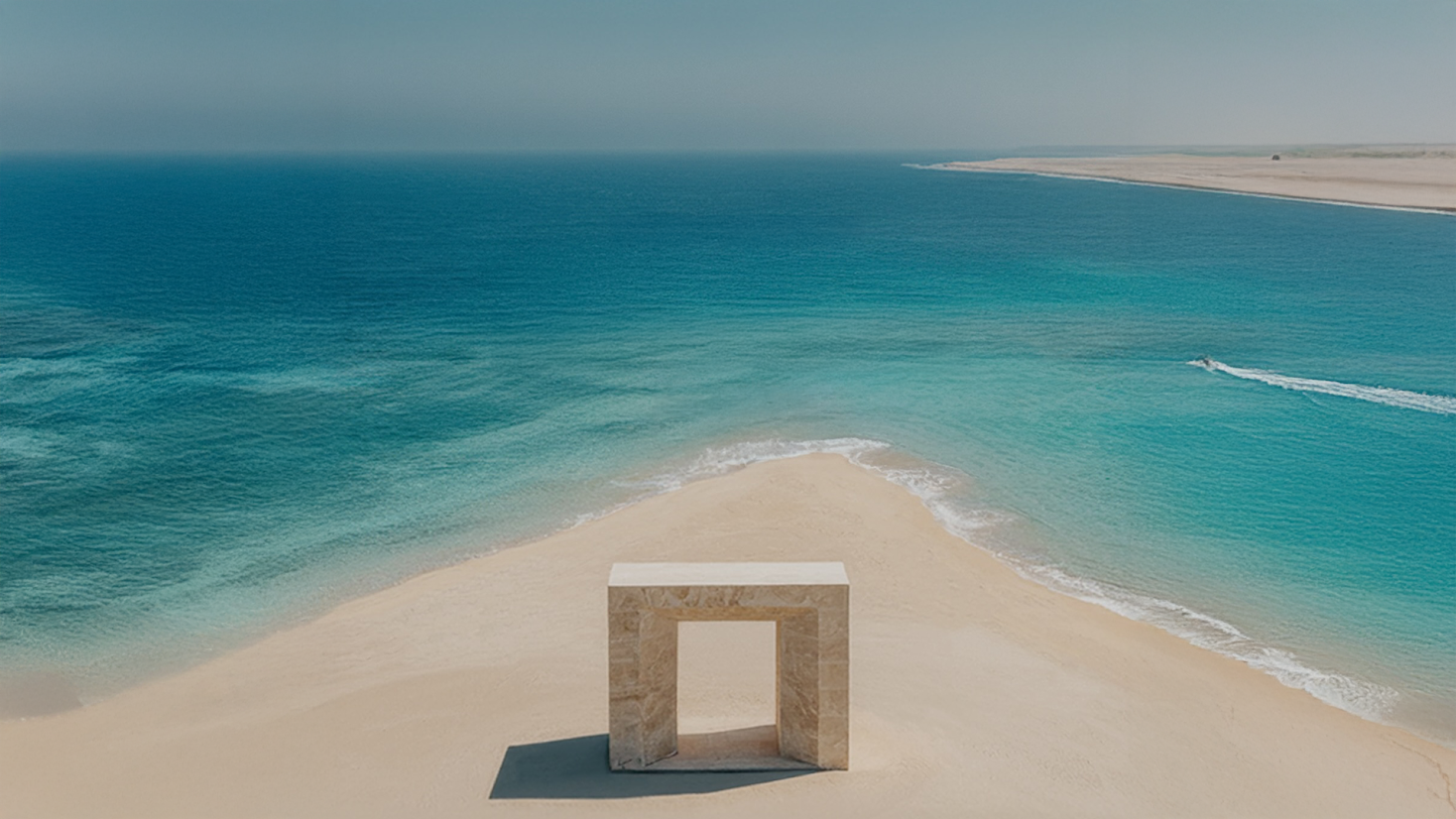
At its essence, Alam Al-Roum is not a resort. It is neither a seasonal attraction nor a series of walled communities for summer tourists. It is designed to be a fully integrated metropolis with residential zones, hotels, marinas, commercial areas, education institutions, healthcare infrastructure, and the year-round amenities that a functional urban center requires. The area, which spans approximately 2,000 hectares and includes more than seven kilometers of continuous shoreline, has long been regarded as one of the Mediterranean’s most valuable yet underutilized natural settings. What’s happening now is the opening of that shoreline on a scale we haven’t seen before.
Why This Investment Matters for Both Egypt and Qatar
From Qatar’s perspective, the motivation goes beyond real estate profit. Doha has spent the past decade placing strategic bets on global coastal and tourism-driven cities: Lusail in Qatar, Porta Moda in Turkey, and several investments across Europe and Asia. Egypt’s Mediterranean coast offers something different, a large, raw, undervalued coastline in a country undergoing economic restructuring, currency realignment, and demand growth in tourism and housing. The timing is uniquely favourable. With the Egyptian pound stabilising and land values still competitive relative to other Mediterranean destinations, the financial logic becomes compelling. And with Qatar holding a dollar-pegged currency, its investment power becomes even stronger during periods of Egyptian currency weakness.
For Egypt, the deal provides immediate financial relief and long-term developmental value. The $3.5 billion land payment alone injects a significant amount of foreign currency into the economy at a crucial time. Beyond the upfront payment, the agreement follows a revenue-sharing model that allows the state to benefit from the project’s success rather than treating the arrangement as a one-off sale. NUCA will receive 15% of the project’s annual net revenues after Qatari Diar recovers its full investment costs. This structure aligns incentives: both sides benefit from quality construction, efficient execution, and sustainable long-term performance.
A North Coast That Works 12 Months a Year
Economically, the project is expected to generate at least $1.8 billion in annual revenue once operational, positioning it as one of the most profitable coastal developments in the region. For Matrouh Governorate specifically, it has the potential to shift the centre of gravity of tourism and urban activity. The North Coast has historically been a seasonal destination, booming in summer and quiet for the rest of the year. Major government-driven developments like New Alamein began the shift toward permanent urbanisation. Alam Al-Roum could amplify that transformation on the far western side of the coast, creating new zones of economic expansion beyond the traditional Sahel strip.
The urban design strategy reinforces the concept of permanency. Plans call for waterfront neighborhoods, integrated schools and universities, comprehensive medical services, community hubs, retail centers, sports facilities, public spaces, and year-round tourism attractions. These features are not typical of seasonal resorts, and their inclusion indicates that Egypt intends to create a continuous Mediterranean urban belt running from El Alamein to Marsa Matrouh. As climate patterns shift and Mediterranean countries’ tourism recovers, Egypt’s northern shoreline is poised to draw worldwide attention beyond domestic travel.
Still, the scale of Alam Al-Roum brings challenges alongside opportunity. Delivering a $30 billion city requires coordination that spans infrastructure, environmental management, transportation networks, construction oversight, and long-term service provision. The Mediterranean coastline is environmentally sensitive, and sustainable planning will need to balance large-scale construction with preservation of natural landscapes. Moreover, successful integration into Egypt’s real estate ecosystem depends on demand. While the North Coast has seen continuous growth in domestic buyers, transforming the area into a year-round city requires attracting not just seasonal visitors but permanent residents, international tourists, and global investors. Achieving that requires reliable utilities, transportation links, competitive hospitality standards, and consistent economic incentives.
Market absorption is another important factor. Luxury seaside developments generally experience periods of high and low demand, depending on area economic conditions and tourism traffic. Egypt must ensure that its overall tourist strategy, from marketing to international connectivity, supports the long-term occupancy of such a large investment. Nonetheless, Egypt benefits from the global trend of second-home purchasers, digital nomads, and international investors looking for affordable Mediterranean options. Compared to Southern Europe or the Gulf, Egypt’s coast has lower expenses and a higher landscape value, which might be a big selling advantage.
A New Direction for Egypt’s Mediterranean Future
In the bigger picture, Alam Al-Roum represents a new generation of coastal development strategy in Egypt. For years, the North Coast’s growth model revolved around seasonal compounds, private beaches, and short-term usage. With Alam Al-Roum, the government signals a shift toward creating permanent, economically active cities that integrate tourism with residential life. When combined with other national megaprojects—from New Alamein to Ras El-Hekma—the pattern becomes clear: Egypt is building an urban infrastructure along its northern waterfront that can reshape national demographics and economic activity.
The project also fits into Egypt’s broader approach to attracting foreign direct investment. Instead of simply selling land, Egypt is increasingly pursuing partnership-based development models where the state shares in long-term returns. This enables continuous revenue streams and aligns the interests of investors and the government. It also demonstrates confidence in the underlying value of Egyptian land, especially in areas with long-term strategic potential.
Ultimately, what stands behind Qatar’s investment in Alam Al-Roum is a combination of strategic vision, economic opportunity, and regional partnership. For Qatar, it is an investment in a coastline with enormous untapped value. For Egypt, it is a step toward transforming the Mediterranean edge of the country into a global development zone. For the region, it represents a movement toward deeper, more structural economic cooperation driven by long-term urban investments.
If executed effectively, Alam Al-Roum could redefine the North Coast as a twelve-month destination with permanent residents, thriving tourism, and global visibility. It could stimulate new markets, attract international investors, raise regional real estate standards, and contribute significantly to Egypt’s economic stability. More importantly, it could shift the narrative of the North Coast from a seasonal getaway to a modern Mediterranean city—one that stands shoulder to shoulder with the world’s coastal urban icons.