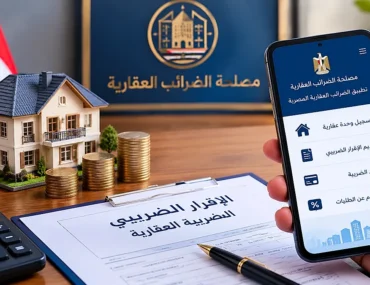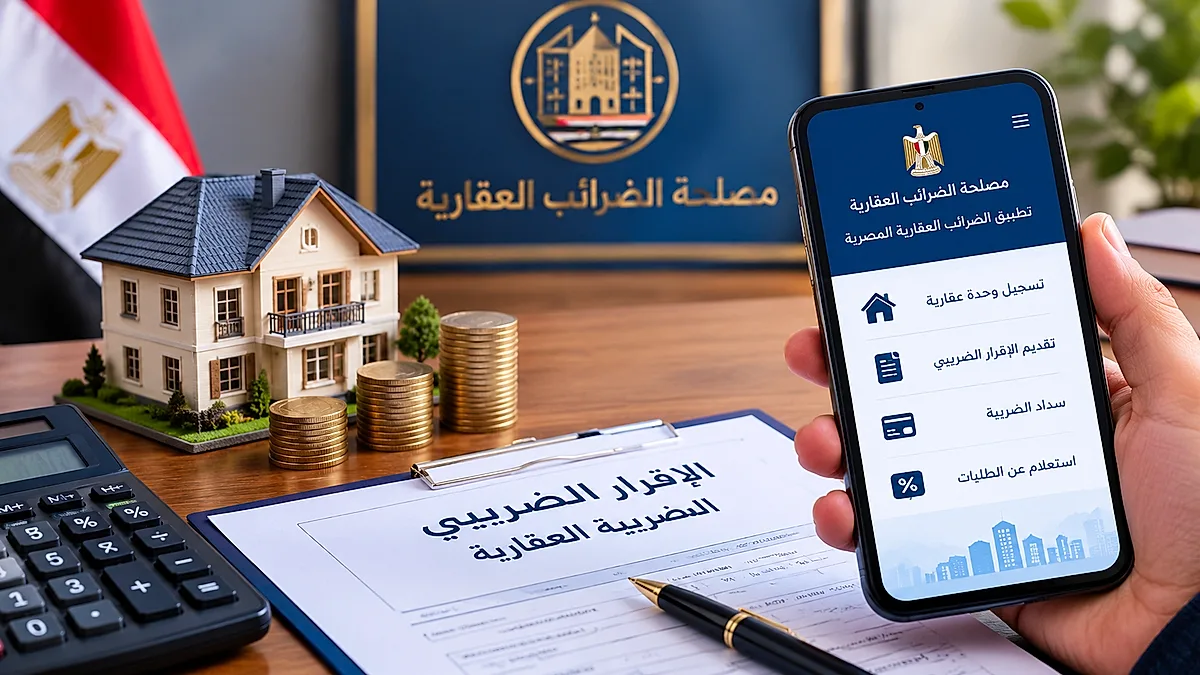
Buying a home in Egypt means dealing with more than the purchase price, registration and maintenance costs. Real estate tax in Egypt is another important point for property owners to understand, especially if you own several properties, rent out a unit or want to know if your home qualifies for an exemption.
Real estate tax, known in Arabic as الضريبة العقارية, is imposed on taxable built properties in Egypt. The system covers residential and non residential properties, with specific rules for properties that are excluded from the tax or qualify for an exemption.
The Real Estate Tax Authority is responsible for assessing, linking and collecting the tax. Its work covers properties across Egypt through its directorates and tax offices.
What Is Real Estate Tax in Egypt?
Real estate tax is a tax imposed on built properties located in Egypt when they fall within the scope of the law. The tax is linked to the property’s estimated rental value rather than simply the price paid when buying it.
This means owning a property does not automatically mean you pay tax based on its market price. The tax calculation starts with the property’s annual rental value, which is assessed according to the applicable rules.
Who Is Responsible for Paying Real Estate Tax in Egypt?
The person responsible for the tax is generally the individual or legal entity that has the right to own, use or exploit the property.
A tenant is not considered the original taxpayer. However, the source information states that the tenant can be jointly responsible for paying the tax within the limits of the rent due to them.
So, simply living in a rented apartment does not normally make the tenant the main person responsible for the property’s real estate tax.
Which Properties Are Subject to Real Estate Tax?
The tax can apply to different types of built properties in Egypt. These include:
- Residential units
- Apartment buildings
- Villas
- Houseboats
- Chalets
- Non residential units
- Certain vacant land used for purposes such as garages, nurseries or rental activities
- Certain structures installed on building roofs or façades when they are rented out or generate payment
A property does not have to be rented to fall under the tax. A property occupied by its owner can also be subject to real estate tax when it meets the conditions set by law.
For example, owning an apartment in Maadi and living in it does not automatically remove it from the tax system. The property’s assessed value and its eligibility for an exemption are what matter.
How Is Property Tax in Egypt Calculated?
The calculation is based on the estimated annual rental value of the property.
According to the information provided, the tax rate is 10% of the annual rental value after deducting the applicable expenses.
The deductions are:
- 30% for residential properties, covering expenses such as maintenance.
- 32% for non residential properties.
So, the calculation does not simply take 10% of the property’s purchase price or current market value.
Discover El Sheikh Zayed Prices, Listings, Neighborhoods, and Location
Which Properties Are Not Subject to Real Estate Tax?
Not every property falls within the tax. The source distinguishes between properties that are not subject to the tax and properties that are exempt under specific conditions.
Examples of properties that are not subject to the tax include:
- Certain state owned buildings allocated for public benefit.
- Buildings used for religious rites or religious education.
- Buildings whose ownership has been expropriated for public benefit, from the date of actual possession.
- Cemeteries and burial buildings.
- Buildings under construction.
This distinction matters because “not subject to tax” and “tax exempt” are not necessarily the same legal situation.
How to Pay Real Estate Tax in Egypt
Once your property has been assessed, knowing when and where to pay real estate tax in Egypt can save you from unnecessary delays or additional charges.
The tax is paid annually in two equal installments. The first installment is due by the end of June, while the second is due by the end of December. You can also pay the full annual amount with the first installment.
The tax can be paid through the relevant Real Estate Tax Authority directorate or tax office responsible for the property’s location. The authority also provides electronic services for tax declarations and payments.
How Often Is the Property Tax Reassessed?
The tax value does not change every year. Under the current system, the property is generally reassessed after five years. The assessment looks at changes that may affect the property’s rental value, which is the basis used to calculate the tax.
This is useful to know if you own a property for several years because the amount you pay is not expected to change simply because another year has passed.
Can You Object to a Real Estate Tax Assessment?
Yes. If you believe the estimated rental value assigned to your property is incorrect, you have the right to challenge the assessment.
The Real Estate Tax Authority states that the taxpayer can submit an appeal within 60 days from receiving the notification of the rental value assessment. The appeal is submitted to the relevant Real Estate Tax Directorate or one of its affiliated offices.
Before submitting an objection, it is worth checking the property details used in the assessment and keeping the relevant ownership and property documents ready.
Invest in Cairo by checking out Maadi Units for Sale, Prices, Map, Districts and More
Real Estate Tax Exemption for Your Main Residence
One of the most important questions for homeowners is whether their main private residence can be exempt from real estate tax.
The source states that a private residence can qualify for an exemption when its net annual rental value is below EGP 24,000. If the value exceeds this amount, the excess is subject to the applicable tax rules. The exemption considers the taxpayer, their spouse and minor children as one family unit.
To apply, the taxpayer needs to submit the required declaration, including Form 6 and Form 6-bis, which lists the properties owned by the family nationwide.
Because exemption thresholds and procedures can be updated, homeowners should confirm the current requirements with the Real Estate Tax Authority before submitting an application.
What Is a Real Estate Tax Declaration?
A real estate tax declaration is an important part of the property tax process. Property owners are required to submit declarations according to the applicable census and assessment schedule.
In general, the property census takes place every five years. The source states that declarations are submitted during the second half of the year preceding the census.
A new declaration may also be required when:
- A new property is constructed.
- Additions or modifications change the property’s rental value.
- Previously vacant land is put to use.
- Another change occurs that affects the property’s taxable status or assessed value.
For a new property or qualifying change, the declaration should generally be submitted by the end of December of the year in which the change occurs. The relevant authority may extend the deadline by up to three months.
What Happens When an Exemption Ends?
An exemption does not necessarily continue forever.
If the reason for an exemption ends, the taxpayer is required to notify the relevant authority by submitting a declaration within 60 days of the exemption ending.
According to the source, the tax is then reconnected from 1 January of the following year.
This is important for property owners whose circumstances change, as continuing to treat a property as exempt after the reason for exemption has ended can create a tax obligation.
How Can You Apply for Tax Lifting?
Tax lifting is different from a tax exemption.
An exemption means the property qualifies for a legal exemption under the applicable conditions. Tax lifting applies in certain circumstances where a property that was previously taxable becomes eligible for lifting.
The source gives examples such as:
- The property becoming eligible for an exemption.
- The building being destroyed or damaged to the point that it can no longer be used.
- Previously vacant independent land becoming unused.
The application is submitted to the relevant tax collection authority along with supporting documents. The source also refers to a EGP 50 deposit and proof that the last tax installment was paid. A committee then examines the application and decides whether the tax should be lifted. If the request is accepted, the deposit is returned according to the stated procedure.
If the reason for lifting the tax later ends, the taxpayer must notify the authority within 60 days, with the tax reconnecting from the following January according to the source.
How Often Is Real Estate Tax Reassessed?
Property rental values are not necessarily assessed only once.
The source explains that the general property census and assessment process takes place every five years. This allows the tax authorities to update the assessed rental values according to the applicable assessment process.
For property owners, this means the amount associated with a property can change following a new assessment. It is therefore useful to keep your property records and previous tax documents organised.
Real Estate Tax vs Income Tax in Egypt
Real estate tax and income tax are two different obligations.
Real estate tax is connected to the taxable property itself and is calculated based on its assessed rental value.
Income tax, on the other hand, relates to income earned by an individual or business and follows separate rules.
For example, owning an apartment can create a real estate tax obligation even if you live in the property yourself. Renting out a property can also create income that may be subject to separate tax rules.
Property owners should therefore avoid treating real estate tax in Egypt and income tax on rental income as the same thing.
What About the Taxes of Rental Properties in Egypt?
Renting out a property does not remove the owner’s real estate tax obligation. The owner or person with the right to own, use or exploit the property is generally the taxpayer. The tenant is not normally the taxpayer, although the law allows for specific circumstances in which the tenant can pay the tax within the limits of the rent due.
For owners considering rental property as an investment, it is also important to distinguish real estate tax from income tax on rental income. They are separate tax matters and should not be treated as the same charge.
If you’re looking for a rental home, you can explore:
- Maadi rental units listed on Bayut
- Units for rent in Zamalek
- Rental Units in El Mohandeseen.
- Properties for Rent in New Cairo
- Units for Rent in El Sheikh Zayed
What Should Property Owners Keep in Mind?
A few simple steps can make dealing with real estate taxes in Egypt easier:
- Keep your ownership and property documents organised.
- Check the property’s assessed rental value.
- Pay installments within the official deadlines.
- Check your eligibility for an exemption instead of assuming one applies.
- If you disagree with an assessment, submit an objection within the specified period.
- Keep payment receipts and other tax documents for your records.
The RTA has also introduced recent measures to make filing and payment easier. In 2026, the authority announced that owners with properties under the jurisdiction of several tax offices can submit one declaration instead of filing a separate declaration at each office.
Want to invest in New Cairo? Check the best compounds and real estate projects there:
Real Estate Tax in Egypt: Quick Answers
Is real estate tax based on the property’s sale price?
No. The calculation is based on the property’s estimated annual rental value after the applicable deductions, not simply its purchase price.
Do foreigners pay property tax in Egypt?
A foreign owner’s nationality does not automatically exempt the property from real estate tax. The property’s tax status and applicable exemptions are the key factors.
Can I challenge the property’s tax assessment?
Yes. An objection to the estimated rental value can generally be submitted within 60 days of receiving the assessment notification.
Does an empty apartment have to pay real estate tax?
A vacant property can still fall under the real estate tax system. Being unoccupied does not, by itself, create an exemption.
How often is the property reassessed?
The tax value is generally reviewed every five years, subject to the rules governing the reassessment.
Where Can You Ask About Real Estate Tax in Egypt?
If you are unsure about your property’s tax status, the safest step is to contact the Real Estate Tax Authority office responsible for the property’s location. This is especially useful when buying an older property, changing its use, renting it out, or checking an assessment that seems higher than expected.
The authority operates through directorates and offices across Egypt, making it possible to handle property tax matters based on the location of the property.
Before visiting, keep important documents such as your ownership contract, property details and previous tax documents available. Having the correct information can make it easier for the tax office to identify the property and review its records.
Real Estate Tax vs. Income Tax on Rental Properties
These two taxes are easy to confuse, but they deal with different things.
Real estate tax is connected to the property itself and is calculated using its assessed annual rental value.
Income tax on rental income relates to the income generated when you rent out a property. It is a separate tax matter and has its own rules for calculating taxable income and filing obligations.
For example, if you own an apartment in Maadi and rent it to a tenant, the property may be subject to real estate tax. The rental income you receive can also have separate tax implications.
Understanding this difference is particularly important for people buying apartments as rental investments.
What Property Owners Should Check
If you own a property in Egypt, a few checks can help you stay on top of your tax responsibilities:
- Check Your Property Details
Make sure the information recorded by the Real Estate Tax Authority matches your actual property, including its location, use and other relevant details.
- Check Your Tax Assessment
The property’s estimated rental value forms the basis of the tax calculation. If you believe the assessment does not reflect the property’s actual circumstances, check the available objection process and deadlines.
- Keep Your Receipts
Keep records of tax payments, declarations, assessments and correspondence with the tax authority. These documents can be useful when selling the property or dealing with future tax questions.
- Check Exemptions
Do not assume that every property is treated in the same way. Egyptian law includes specific exemptions and special provisions, so check the current rules before making a payment or assuming that your property is exempt.
Real Estate Tax Egypt: Frequently Asked Questions
How much is real estate tax in Egypt?
The standard real estate tax rate is 10% of the net annual rental value after the applicable maintenance deduction. For residential properties, a 30% maintenance deduction is applied before calculating the tax.
Is property tax based on the property’s purchase price?
No. The tax calculation is based on the property’s estimated annual rental value, rather than simply the amount paid when the property was purchased.
Do foreigners pay real estate tax in Egypt?
Foreign property owners are not automatically exempt because of their nationality. A taxable property owned by a foreigner can be subject to the applicable real estate tax rules in Egypt.
Do I pay real estate tax on an empty apartment?
A finished apartment can remain subject to real estate tax even when it is vacant. Simply leaving a property unoccupied does not automatically remove it from the tax system.
When is real estate tax paid in Egypt?
The annual tax is normally paid in two equal installments. The first is due by the end of June and the second by the end of December. The full amount can also be paid with the first installment.
Can I object to my property tax assessment?
Yes. If you disagree with the estimated rental value, you can submit an objection through the relevant Real Estate Tax Authority office. The objection period is generally 60 days from receiving the assessment notification.
Understand Everythinga bout Real Estate with Bayut
Real estate tax may seem complicated at first, but the main points are straightforward. The tax is linked to the property’s assessed rental value, not its purchase price, and several exemptions and deductions can affect the final amount.
If you are planning to buy, rent out or manage a property in Egypt, checking its tax position should be part of your property research. For the latest requirements and your property’s specific assessment, always confirm the details with the Real Estate Tax Authority.
Looking for your next home or rental investment? Browse available properties on Bayut Egypt to compare homes across different areas and find a property that fits your needs.




 as a preferred source on Google