For decades, transportation has been one of the biggest challenges facing Greater Cairo and its rapidly expanding urban communities.
As new cities emerged east and west of the capital, the need for a faster, more efficient, and environmentally conscious transit system became increasingly important. This is where the Monorail in Egypt enters the picture.
What began as an ambitious vision has now become one of the country’s most significant infrastructure achievements.
Designed to connect key residential, commercial, and administrative hubs, Egypt’s monorail is reshaping how people move between Cairo, New Cairo, New Administrative Capital, Sheikh Zayed, and 6th of October City.
Monorail in Egypt
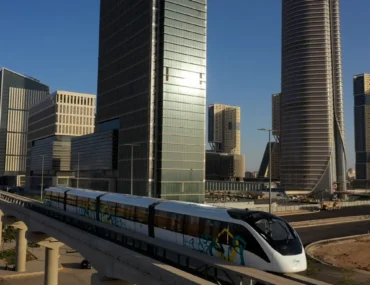
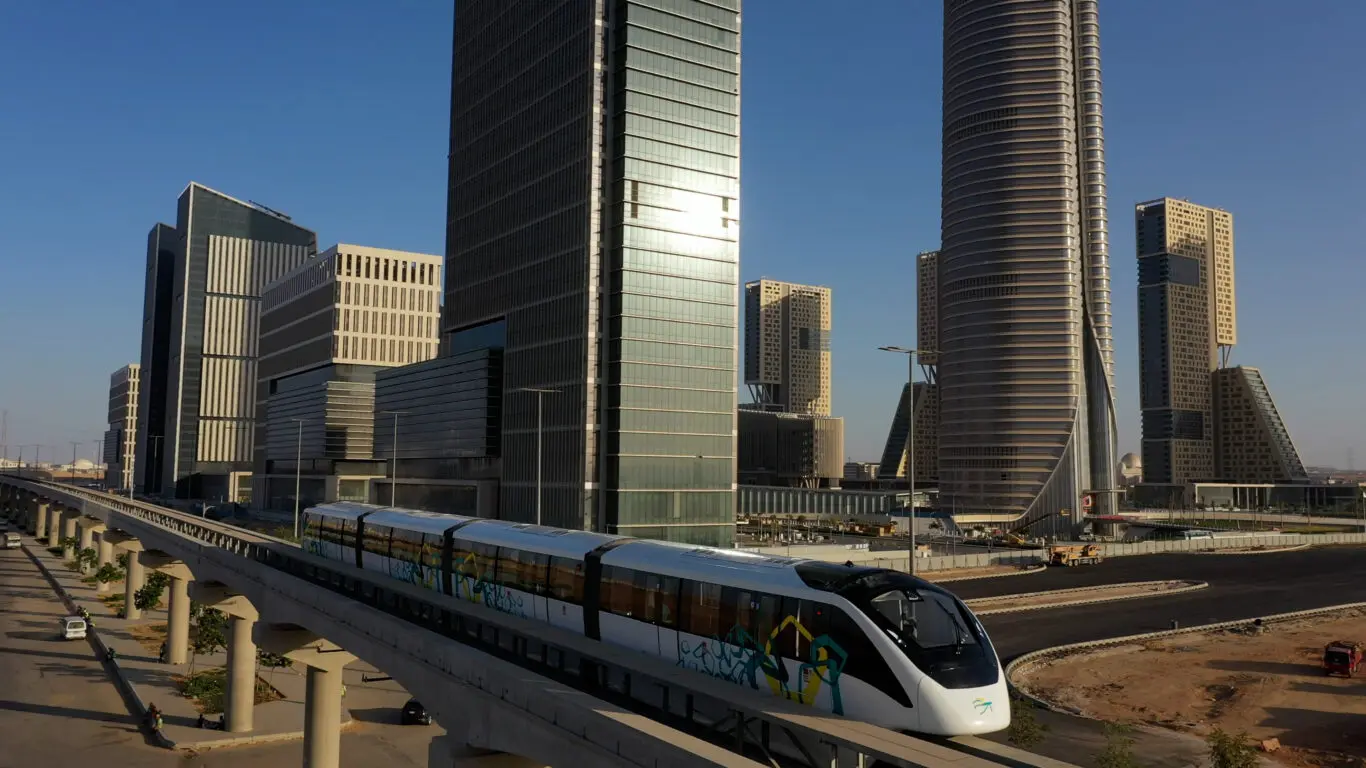
The Monorail in Egypt is the country’s first monorail transportation system and one of the largest driverless monorail networks in the world.
The project officially moved from planning to implementation in 2019 under the supervision of Egypt’s National Authority for Tunnels. Trial operations began in July 2025 on the route connecting El Moshir Station and New Administrative Capital.
In March 2026, the line officially opened to passengers.
Today, the network consists of two major lines:
- The New Administrative Capital Monorail
- The 6th of October Monorail
Combined, the two routes extend for nearly 99 kilometers, making Egypt home to the world’s longest driverless monorail network.
Explore properties for sale in New Capital via Bayut and connect with other parts of Egypt!
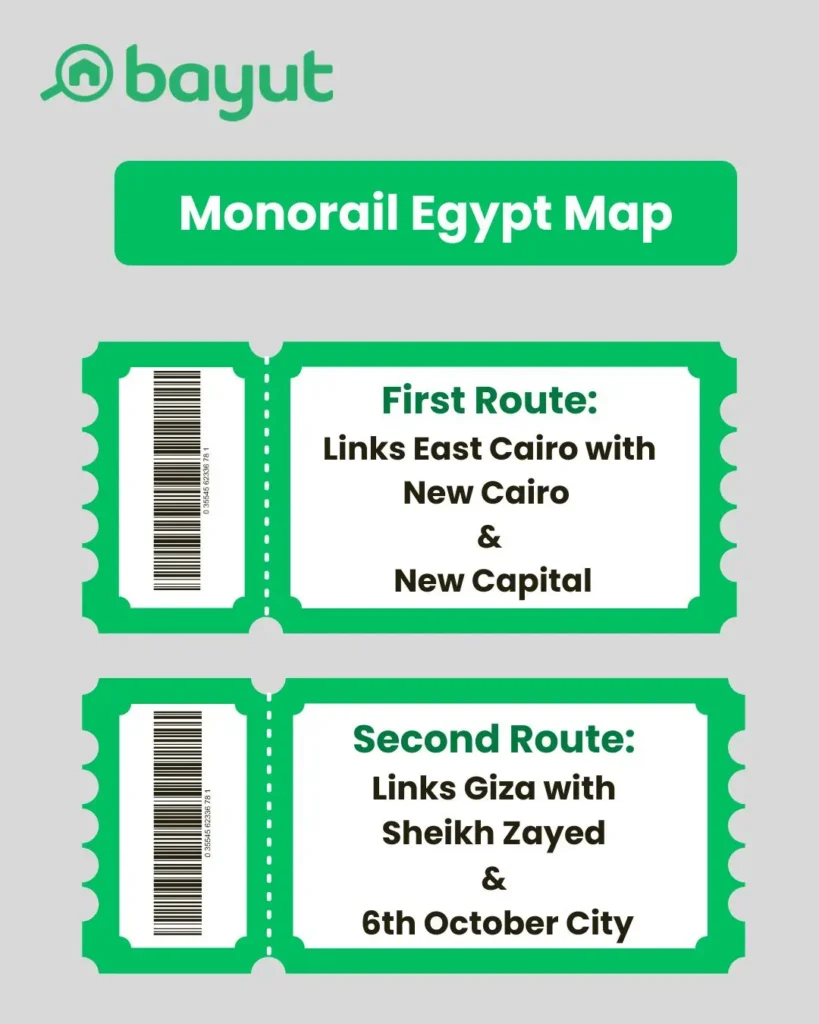
Monorail Egypt Map and Network Overview
When looking at the Monorail in Egypt map, you’ll notice that the network is designed to connect Cairo’s eastern and western urban corridors.
- The first route links East Cairo with New Cairo and the New Administrative Capital.
- The second route connects Giza Governorate with Sheikh Zayed Egypt, 6th of October City, and surrounding urban expansions.
The strategic design allows passengers to travel between the eastern and western sides of Greater Cairo using a combination of monorail and Metro Line 3 connections.
This integration significantly improves accessibility between some of Egypt’s fastest-growing residential and business districts.
Monorail Egypt Stations in New Capital Line
The first line is the backbone of eastern Cairo’s transportation network.
Starting from Stadium Station on Metro Line 3, the route passes through several major destinations before reaching the New Administrative Capital.
The line spans approximately 56.5 km and serves key residential compounds, business districts, educational institutions, and government centers.
Many people searching for monorail Egypt stations are specifically looking for the stations serving the New Administrative Capital route.
The stations include:
- Stadium
- Hisham Barakat
- Nouri Khattab
- Seventh District
- Free Zone
- Marshal Tantawy
- Cairo Festival
- El Choueifat
- Air Hospital
- Al Narges District
- Mohammed Naguib
- American University
- Emaar
- Nafoura Square
- Al Barwa
- Middle Ring Road
- Mohammed Bin Zayed
- Regional Ring Road
- Almasa Hotel
- Ministries District
- Administrative Capital
This route serves some of Cairo’s most important residential and commercial destinations, including New Cairo and the government district in New Administrative Capital.
Where Are the Stops on the Cairo Monorail?
For those wondering, Where are the stops on the Cairo monorail?, the answer depends on the line you are using.
On the eastern route, stations are strategically located near:
- New Cairo communities
- Major universities
- Business districts
- Government facilities
- Residential compounds
- Commercial centers
This positioning allows residents and employees to access major destinations without relying entirely on private transportation.
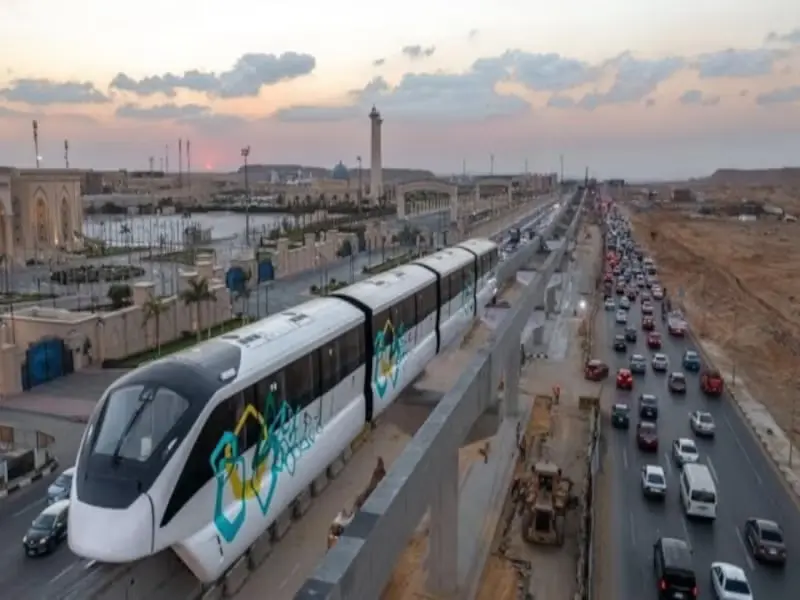
6th of October Monorail Line
The second route serves western Greater Cairo.
It starts from Boulak Station, connected to Metro Line 3, and extends toward 6th of October City and Sheikh Zayed.
This route plays an important role in linking western residential communities with the broader transportation network.
Monorail Egypt Stations on the 6th of October Line
The western route includes the following stations:
- Boulak (Gameat El Dewal)
- Ring Road
- El Marioutia
- El Mansouria
- Desert Road
- Hyperone
- Juhayna
- Authority of Urban Communities
- El Hosary
- Dar El Fouad
- Industrial Zone
- High Speed Railway
These stations provide direct access to some of the most populated and rapidly developing areas in West Cairo.
Monorail Egypt Ticket Price
Since the launch of operations, one of the most frequently searched topics has been monorail Egypt ticket price.
The ticket structure is designed to accommodate different travel distances and passenger categories.
Current fares include:
- Up to 7 stations: 20 EGP
- More than 7 stations: 80 EGP
The government has also introduced subscription options for regular commuters.
Monorail in Egypt Tickets and Passes
For passengers who rely on the network daily, several pass options are available.
Current subscription categories include:
Monthly Passes
- Public monthly pass starting from 390 EGP
- Elderly monthly pass starting from 275 EGP
Capital Train Monthly Passes
- Up to 3 stations: EGP 300
- Up to 7 stations: EGP 500
- More than 7 stations: EGP 600
Annual Passes
- Two lines annual pass: EGP 5,100
- Three lines annual pass: EGP 6,400
As the system expands and passenger demand grows, fare structures may be updated in the future.
Read this guide to discover the top private universities in Cairo, many of which are now easily accessible through the Monorail in Egypt.
Monorail Egypt Timetable
Another common question concerns the monorail Egypt timetable.
As with most modern transportation systems, operating schedules are designed to support daily commuting patterns and peak travel hours. It’s daily from 6:00 AM to 6:00 PM
Passengers are encouraged to check official announcements and station information for the latest operating hours, departure frequencies, and service updates.
As the network continues expanding, timetable adjustments may be introduced to accommodate growing passenger demand.
What Is the Difference Between Metro and Monorail?
Many people compare the monorail with Cairo’s existing metro system, but there are several important differences.
The metro operates on conventional railway tracks, often underground or at ground level.
The monorail operates on a single elevated beam and is fully separated from road traffic.
Here is a quick comparison:
| Feature | Metro | Monorail |
|---|---|---|
| Track Type | Conventional railway tracks | Single elevated beam |
| Route Structure | Underground, elevated, or ground level | Fully elevated |
| Technology | Traditional rail system | Fully driverless and automated |
| Coverage Area | Extensive network across Greater Cairo | Connects New Cairo, New Administrative Capital, Sheikh Zayed, and 6th of October City |
| Purpose | Serves densely populated urban districts | Connects emerging cities and new urban communities |
| Traffic Impact | Operates independently of road traffic | Fully separated from road traffic |
| Connectivity | Multiple metro lines across Cairo | Integrated with Metro Line 3 for seamless transfers |
| Travel Experience | Ideal for daily travel within Cairo | Designed for fast travel between major urban hubs |
| Schedule & Frequency | High frequency services throughout the day | Scheduled services designed for long distance commuting corridors |
| Infrastructure | Older and continuously expanding network | One of Egypt’s newest transportation projects |
5 Compounds Near the Monorail Station
If you ask us, one of the right decisions you can make is living in a compound or area near the Monorail stations for easy commute. Some of the notable compounds near the Monorail Station include;
- Castle Landmark Compound in New Capital By Cred
- Nurai Compound in 5th Settlments
- Boutique Village in Fifth Settlements
- O1 – R8 – New Capital (Ray Residence- Radix Development)
- Palm Hills New Cairo Gate 1
Which Countries Have Monorails?
Another popular question is: Which countries have monorails?
Monorail systems operate in several countries around the world, including:
- Japan
- China
- United Arab Emirates
- Saudi Arabia
- Malaysia
- Brazil
- India
- Germany
- United States
- Egypt
Many cities adopt monorail systems because they require less ground space than conventional rail networks while providing efficient transportation in densely populated urban environments.
Final Thoughts
The Monorail in Egypt represents far more than a new transportation project. It reflects a broader transformation in how Egyptian cities are planned, connected, and experienced.
By linking Cairo with New Administrative Capital, New Cairo, Sheikh Zayed, and 6th of October City, the network provides a faster, smarter, and more sustainable way to move across some of the country’s most important urban centers.
To explore properties near major transportation corridors, discover emerging communities, and access real-time market insights, download the Bayut Egypt app and stay connected to the latest opportunities across Egypt’s property market.
Bombardier Transportation, Arab Contractors, and Orascom Construction
Yes
Up to 80 km/h
Nearly 99 kilometers
Yes. Both monorail lines are integrated with Metro Line 3
Egypt, China, UAE, Saudi Arabia, Malaysia, Brazil, India, Germany, US, and Japan



 as a preferred source on Google