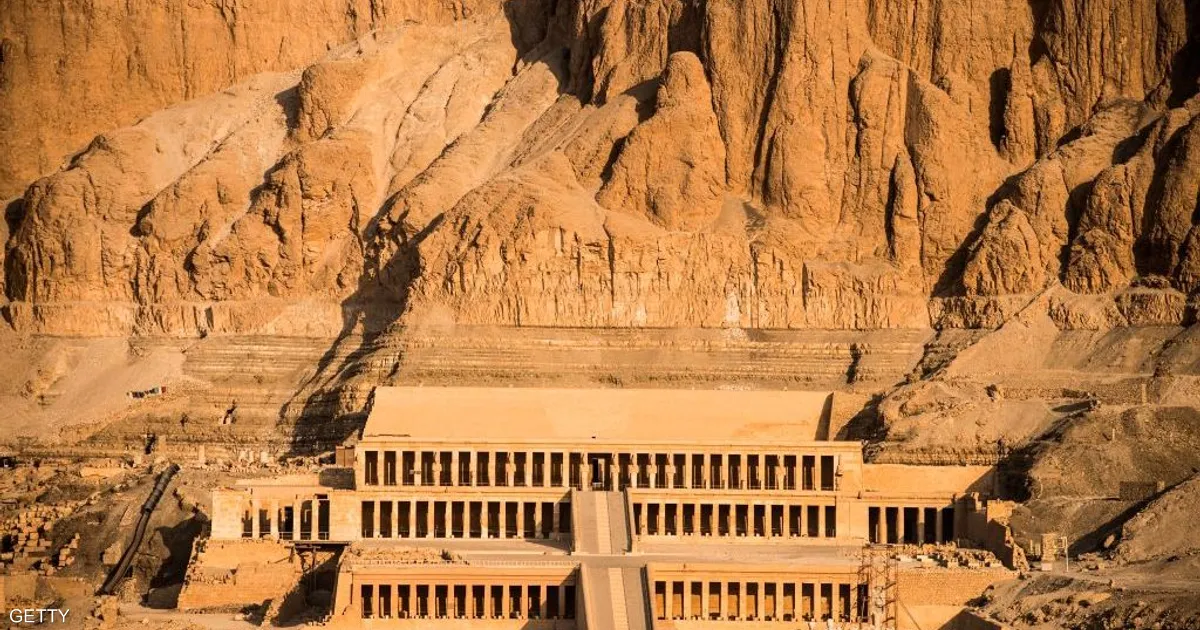
On the west bank of the Nile, where the green landscapes of Luxor give way to the rugged cliffs of the desert, lies one of the most remarkable archaeological sites in the world.
The Valley of the Kings in Egypt offers a rare glimpse into the beliefs, ambitions and artistic achievements of the pharaohs who ruled during the New Kingdom.
Beneath its seemingly barren landscape, elaborately decorated tombs preserve stories of royal life, religious rituals and the ancient Egyptian understanding of the afterlife.
For travellers interested in history, architecture and cultural heritage, visiting this extraordinary site is about much more than seeing the resting place of famous rulers.
It is an opportunity to explore an ancient civilisation through its own words, symbols and artistic traditions. From Tutankhamun’s celebrated tomb to the monumental burial chambers of Seti I and Ramesses VI, each visit reveals a different aspect of Egypt’s royal past.
Planning a trip requires a little preparation, too. Knowing where the valley is located, which tombs deserve priority, how tickets work and how much time to allow can make the experience considerably more rewarding. Here is what to know before exploring one of Luxor’s most fascinating historical landmarks.
Brief History of the Valley’s Royal Tombs
Here is some info about the Valley of the Kings Luxur;
- The Valley of the Kings served as a royal burial ground primarily during Egypt’s New Kingdom, approximately 1550 to 1069 BC.
- This period encompassed the Eighteenth, Nineteenth and Twentieth Dynasties, when Egypt was a powerful state with extensive political, military and cultural influence.
- Rather than constructing enormous pyramids above ground, New Kingdom rulers commissioned tombs cut deep into the surrounding limestone cliffs.
- These underground chambers could be decorated with elaborate paintings, inscriptions and religious scenes intended to support the deceased king’s journey into the afterlife.
- The move towards concealed tombs also reflected a practical concern. Earlier pyramids had suffered from grave robbing, and hiding royal burial chambers within a secluded valley offered an alternative approach to protecting the dead and their treasures.
- The first king confirmed to have been buried here was Thutmose I, a ruler of the Eighteenth Dynasty. His reign helped establish the tradition that would continue for centuries, as successive pharaohs commissioned tombs designed to reflect their religious beliefs, royal status and expectations of eternal life.
- Certain royal family members and high-ranking individuals were also interred there, making the familiar name somewhat broader in practice than its title suggests.
- Today, the site contains more than 60 identified tombs, alongside unfinished burial structures. Each tomb has its own designation, commonly written as KV followed by a number, meaning King’s Valley. For example, Tutankhamun’s tomb is known as KV62, while the tomb of Seti I is KV17.
Where Is the Valley of the Kings?
The Valley of the Kings is located on the west bank of the Nile in Luxor, Upper Egypt, opposite the area where the ancient city of Thebes once flourished.
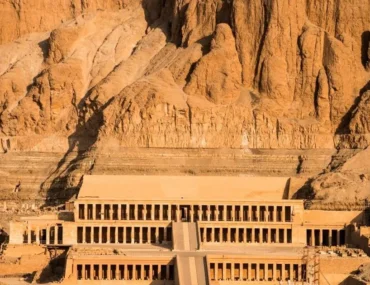
It sits within a dry, rocky landscape near other important archaeological monuments, including the Temple of Hatshepsut and the Valley of the Queens.
Luxor is often described as an open-air museum because of the remarkable concentration of temples, tombs and other ancient monuments found throughout the city and its surroundings. The Valley of the Kings is among its most internationally recognised sites, attracting visitors interested in ancient Egyptian history and archaeology.
The surrounding cliffs also offered a degree of natural seclusion. A prominent, pyramid-shaped mountain peak rises above the landscape, echoing the pyramid’s longstanding association with royal burial and regeneration.
Together, the geography and religious symbolism made the valley a fitting place for the tombs of Egypt’s rulers.
How to Get to the Valley of the Kings
The valley is on Luxor’s West Bank, across the Nile from much of the city’s main accommodation and transport infrastructure.
- From central Luxor: A taxi, private driver or organised excursion is usually the simplest option. Many visitors combine the valley with other West Bank landmarks to make the most of the journey.
- From Cairo: Travelling to Luxor by domestic flight or train is possible, but a same-day excursion can be demanding. An overnight stay provides more time to explore the valley and other archaeological sites without rushing.
- From Hurghada: A road excursion is possible, and the route is popular with travellers staying on the Red Sea coast. However, the journey takes several hours each way, so an organised day trip can involve a very early departure and a long return.
Read this guide to find out more places to go in Egypt:
Why Were the Pharaohs Buried Here?
Understanding the religious significance of the valley makes its tombs far more interesting than a simple collection of underground chambers. Ancient Egyptians viewed death not as an absolute ending, but as a transition into another form of existence.
The tombs were designed to support this transition through their architecture, inscriptions and decorative programmes. Their walls often feature religious texts, depictions of deities and scenes illustrating the deceased ruler’s journey through the underworld.
Some of the principal texts represented in the royal tombs include:
- Amduat: A religious composition describing the sun god’s journey through the underworld during the night.
- Book of Gates: A funerary text depicting the stages and challenges encountered on the journey towards the afterlife.
- Book of Caverns: A composition concerned with the regions of the underworld, divine beings and the fate of the deceased.
- Book of the Dead: A collection of spells intended to help the deceased navigate the afterlife, although its contents and use varied across periods and tombs.
The decoration was not simply ornamental. Images, inscriptions and architectural features were connected to religious ideas about transformation, protection and rebirth.
The tomb of Seti I, for example, is particularly notable for its extensive decoration and the quality of its painted scenes and reliefs. By contrast, Tutankhamun’s burial chamber is relatively modest in scale, demonstrating that a tomb’s fame does not necessarily reflect its original size or architectural ambition.
This diversity is one of the valley’s most compelling qualities. Every tomb offers a different combination of design, religious symbolism and artistic expression, providing archaeologists with valuable evidence of how ancient Egyptian beliefs developed over time.
Best Tombs to Visit in the Valley of the Kings
With dozens of tombs across the site, choosing which chambers to explore can be challenging, particularly if you have limited time in Luxor. The best approach is to prioritise tombs that offer different experiences, from exceptional wall paintings to archaeological discoveries that changed how the world understood ancient Egypt.
Access to individual tombs can vary, and certain chambers may require separate tickets. Check the current arrangements before your visit.
Tutankhamun’s Tomb (KV62)
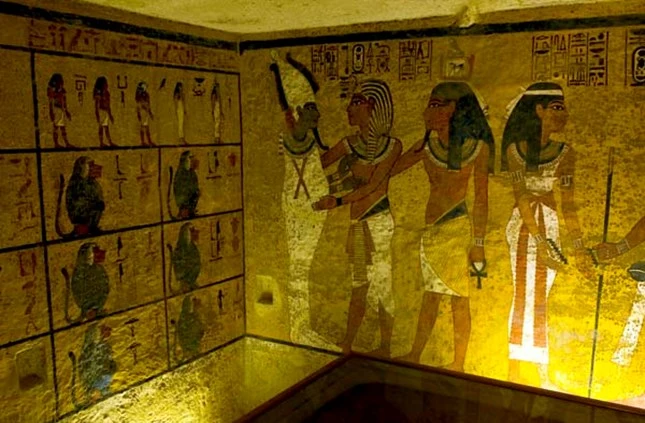
Few archaeological discoveries have captured the public imagination quite like the discovery of Tutankhamun’s tomb in 1922. British archaeologist Howard Carter and his team uncovered a burial chamber containing thousands of objects, offering an extraordinary glimpse into the material culture of Egypt’s royal court.
Tutankhamun ruled during the Eighteenth Dynasty and died while still a young man. His tomb is comparatively small, especially when measured against the grander burial complexes of other New Kingdom rulers. Yet its historical significance is immense because it was discovered with much of its original contents still present.
Inside, visitors can see the decorated burial chamber and learn about the young king’s funerary arrangements. The chamber’s paintings depict the funeral and Tutankhamun in the presence of deities, reflecting the religious beliefs surrounding royal death.
Seti I’s Tomb (KV17)
Often regarded as one of the valley’s most impressive royal tombs, the tomb of Seti I stands out for its scale, architectural complexity and exceptionally detailed decoration.
Seti I ruled during the Nineteenth Dynasty and was the father of Ramesses II. His tomb, sometimes called Belzoni’s tomb after the explorer Giovanni Battista Belzoni, is among the longest and deepest burial complexes in the valley.
Its corridors and chambers feature richly painted scenes, funerary texts and astronomical imagery. The decoration includes religious compositions such as the Amduat and the Book of Gates, which describe aspects of the deceased king’s journey through the underworld.
The tomb also introduced notable architectural features, including a vaulted burial chamber and a descending passage that extends farther into the ground. These elements reflect the importance of both ritual symbolism and architectural design in royal funerary traditions.
Ramesses VI’s Tomb (KV9)
The tomb of Ramesses VI is another excellent option, especially for visitors fascinated by astronomical imagery and funerary literature.
Originally begun by Ramesses V, the tomb was enlarged and used by his successor, Ramesses VI. Its layout consists largely of descending corridors that lead towards the burial chamber, with decorated walls and ceilings throughout much of the complex.
The paintings and inscriptions include several important funerary compositions, among them the Book of Gates, the Book of Caverns and scenes associated with the Amduat. Astronomical representations decorate the ceilings, connecting the king’s passage through the underworld with the sun’s nightly journey and its rebirth at dawn.
Other Tombs in Luxor Valley of the Kings Worth Considering
Depending on which tombs are open and included in your admission arrangements, several other chambers may deserve a place on your itinerary.
- Horemheb’s tomb (KV57): An important example of royal tomb architecture from the late Eighteenth Dynasty, with religious scenes and funerary texts.
- The tomb of Ramesses III (KV11): Known for its decorated corridors and extensive religious imagery.
- The tomb of Merenptah (KV8): Associated with a ruler of the Nineteenth Dynasty and notable for its substantial burial complex.
- The tomb of Thutmose III (KV34): Particularly interesting for its distinctive architectural design and unusual style of wall decoration.
The best tombs to see in the Valley of the Kings ultimately depend on your interests. Tutankhamun offers the strongest connection to a celebrated archaeological discovery, Seti I showcases elaborate artistic achievement, and Ramesses VI provides an excellent introduction to the visual language of ancient Egyptian funerary beliefs.
Want to discover Sinia attractions? Read this guide;
Valley of the Kings Opening Hours and Ticket Prices
The Egyptian Ministry of Tourism and Antiquities lists the Valley of the Kings as open daily from 6:00 AM to 5:00 PM. Its published admission prices are:
| Visitor category | Standard admission |
|---|---|
| Foreign adult | EGP 750 |
| Foreign student | EGP 375 |
| Egyptian adult | EGP 60 |
| Egyptian student | EGP 30 |
How Much Time Should You Allow In valley of the Kings Egypt?
For most travellers, two to three hours is a reasonable starting point for exploring the principal tombs. Visitors with a strong interest in archaeology, photography or ancient Egyptian religion may prefer to allow longer.
Your actual visit will depend on the number of tombs you enter, walking distances, transport arrangements within the site and the time needed to understand the monuments.
A practical itinerary could include:
- First 30 minutes: Arrive, check ticket arrangements and familiarise yourself with the site.
- Next 60–90 minutes: Explore two or three accessible tombs, prioritising their decoration and historical significance.
- Final 30 minutes or more: Visit another available tomb, review the site’s history and allow time for the return journey.
These are suggested planning estimates rather than fixed timings. If you are visiting with older travellers or children, consider allowing additional time for walking and resting.
Can You Visit the Valley of the Kings and Other Luxor Attractions in One Day?
Yes. The Valley of the Kings can be combined with other West Bank landmarks, although the ideal itinerary depends on your available time and interests.
The nearby Temple of Hatshepsut is a natural addition because of its distinctive terraces and setting beneath the cliffs. The Colossi of Memnon are another popular stop, while the Valley of the Queens offers a different perspective on royal burial traditions.
If you have more time, cross the Nile to explore Karnak Temple and Luxor Temple on the East Bank. Together, these sites illustrate the scale and importance of ancient Thebes as a religious and political centre.
The wider archaeological landscape is recognised through UNESCO’s World Heritage listing for Ancient Thebes with its Necropolis, inscribed in 1979. The designation reflects the area’s exceptional concentration of temples, tombs and monuments associated with ancient Egyptian civilisation.
Final Thoughts: Making the Most of Your Visit
The Valley of the Kings rewards visitors who look beyond the fame of its best-known pharaohs. Its tombs reveal the sophistication of ancient Egyptian architecture, the importance of religious beliefs and the remarkable artistic skill required to create monuments intended to endure beyond a human lifetime.
Whether you are most interested in Tutankhamun’s discovery, Seti I’s intricate decoration or the astronomical imagery in Ramesses VI’s tomb, planning ahead will help you appreciate the site’s extraordinary details.
For travellers exploring Egypt, Luxor is also an opportunity to experience a different side of the country, one shaped by the Nile, historic neighbourhoods and a living community connected to one of the world’s most significant archaeological landscapes.
If your trip inspires you to discover more of Egypt, explore Bayut Egypt for property listings and area guides that help you learn more about the places and communities shaping life across the country.





 as a preferred source on Google